What Is AdAttributionKit for Apps?
Learn how AdAttributionKit for apps reports privacy-preserving install and re-engagement outcomes for iOS campaign decisions.

AdAttributionKit for apps is Apple’s privacy-preserving framework for measuring iOS and iPadOS app advertising. It attributes installs and certain re-engagements with signed postbacks, instead of giving advertisers a person-level trail. That changes what a user acquisition team can expect from an iOS report and how it should compare campaigns.
Apple describes App AdAttributionKit as a framework that builds on SKAdNetwork. It can measure the campaign behind an install without tracking people or devices across other companies’ apps. The result is useful, but conditional fields and delayed reporting mean it should be read as an aggregate measurement system, not a click log.
AdAttributionKit for apps measures app ad outcomes without user-level tracking
App AdAttributionKit connects an ad interaction to an app outcome when the privacy rules permit it. Apple says it supports install attribution and, on supported system versions, re-engagement measurement. A click-through install can be attributed when someone taps an ad, reaches the app product page, installs, and later opens the app. Apple states that the click-through lookback window is 30 days. View-through attribution is available for an ad view followed by an install within 24 hours.
The framework applies an attribution rule across participating networks. If a person taps ads from several registered networks before installing, the most recent attributable click receives credit. If a relevant network is not registered, the result can reflect the last known interaction from a participating network. That is why a report should name the networks covered before anyone treats its totals as a full media-mix answer.
It is not a replacement for every measurement input. Cost, creative labels, campaign naming, purchases, and refund data still need their own reliable sources. For Android campaigns, the Google Play Install Referrer setup has a different data path. On iOS, the framework is designed to preserve privacy by limiting postback detail and delaying delivery.
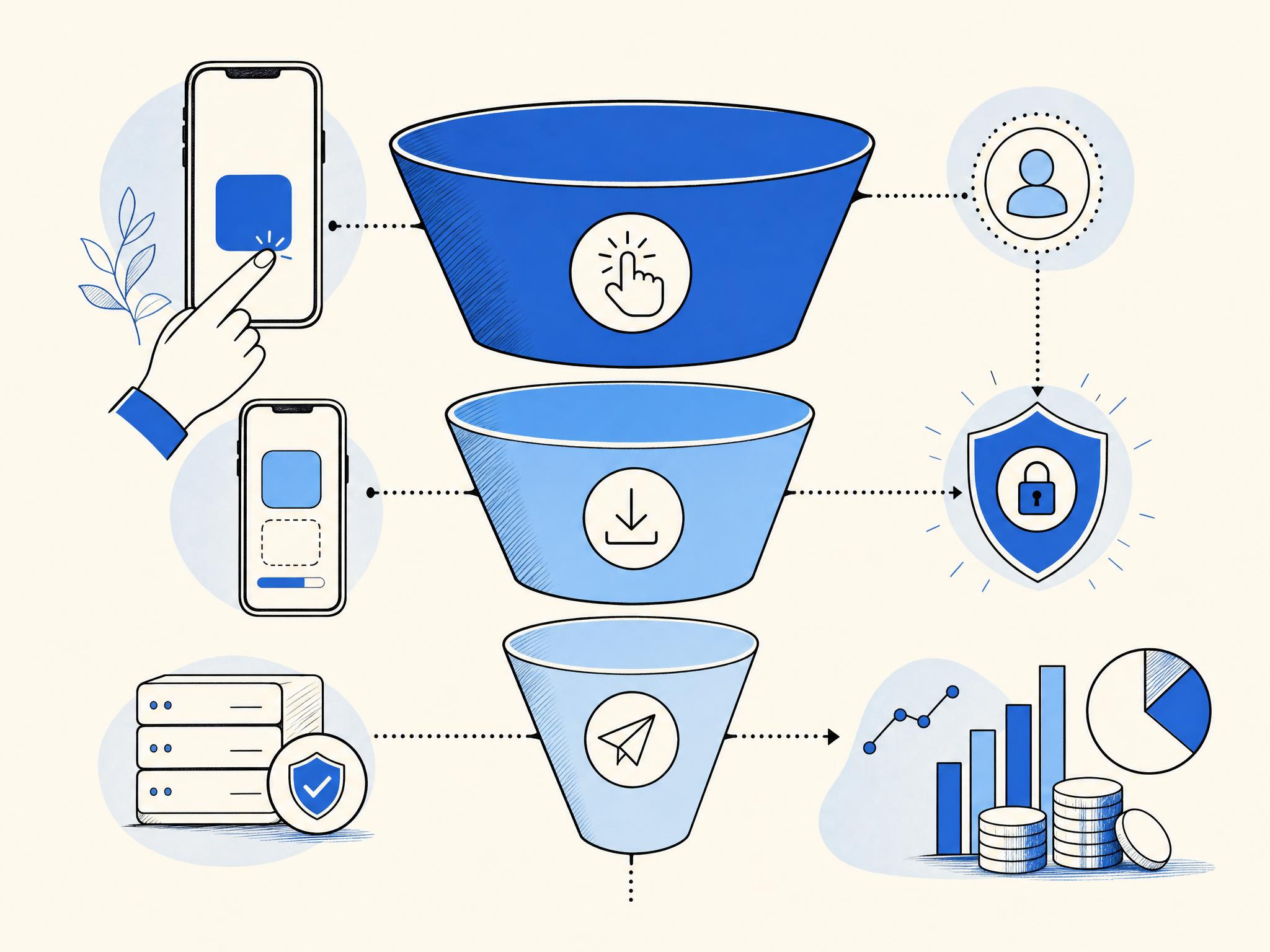
AdAttributionKit postbacks contain campaign signals, but some fields can be absent
Apple’s App AdAttributionKit overview lists the types of information that can appear in an install or re-engagement postback. These include an advertised item identifier, conversion type, source identifier, and conversion values. A publisher item identifier can also be available. The last two are conditional, so a blank field does not automatically mean the campaign failed.
Crowd anonymity controls how much detail the framework can send. When conversion volume is low, a postback may omit data that would make a small group easier to identify. As volume grows, the report can contain more information while still applying Apple’s privacy safeguards. A dashboard should therefore separate three states: a reported value, an intentionally unavailable value, and a genuinely missing ingestion record.
Conversion values are where the product team decides what early user quality means. Apple says an advertiser can configure up to 64 signals of user value for an install notification. A subscription app might reserve values for trial start, paid conversion, and an early renewal signal. A game might assign them to tutorial completion, first purchase, or a retention milestone. The schema needs to be stable long enough for cohort comparisons to make sense.
The existing guide to SKAdNetwork conversion values covers the discipline of mapping early behavior to useful reporting buckets. The same rule applies here: choose events that help decide whether a campaign deserves another dollar, rather than events that merely happen often.
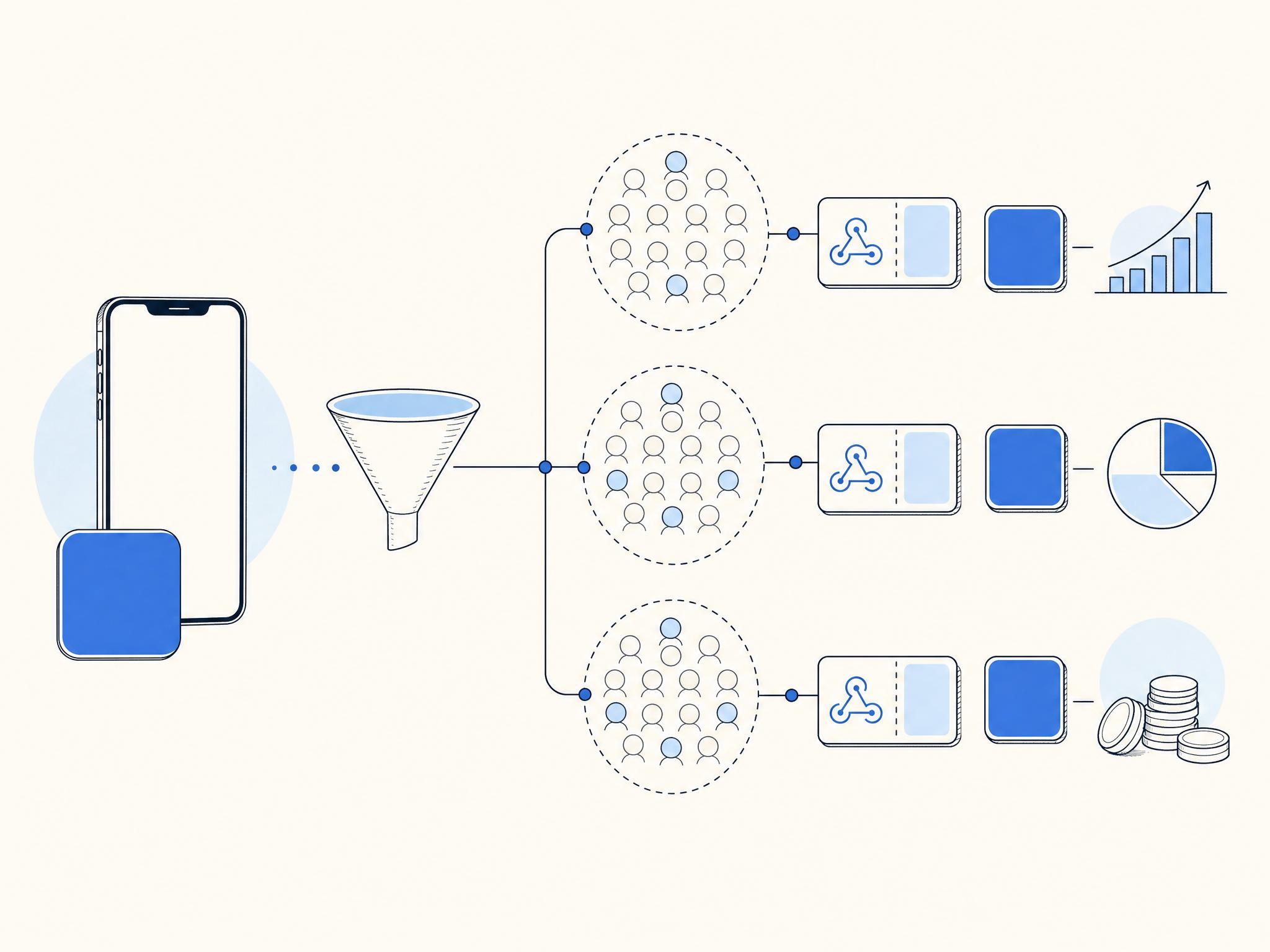
Read a sample cohort as an aggregate decision tool
This table is a sample made for this article. It shows how a UA team might compare two campaigns after postbacks and revenue events are aggregated. It does not represent a benchmark or a promised outcome.
| Campaign | Attributed installs | Known conversion values | Day-7 net revenue | Spend | Day-7 cohort ROAS |
|---|---|---|---|---|---|
| Video prospecting | 1,200 | 780 | $2,160 | $3,000 | 72% |
| Search intent | 620 | 510 | $1,550 | $1,600 | 96.9% |
The calculation is simple: Day-7 cohort ROAS equals Day-7 net revenue divided by spend. For the search campaign, $1,550 divided by $1,600 equals 0.96875, or 96.9%. The decision is not to declare the campaign a winner after one ratio. Check its spend, cohort age, geography, and the share of postbacks with useful conversion information. A campaign with lower volume can look cleaner because there are fewer records to inspect.
Keep attributed installs separate from total installs. Also keep unknown conversion values separate from zero-value users. Mixing those groups turns a privacy threshold into a false performance result. A cohort report needs clear definitions for revenue, refund treatment, and the event window before it can guide a budget shift.
Set up the measurement plan before the first campaign scales
- Confirm which ad networks are registered and participating. Apple notes that attribution can only occur among integrated networks, so this list belongs in the reporting documentation.
- Choose conversion values that reflect actions worth paying for. Keep the mapping short enough that analysts can explain each bucket.
- Store every postback and its arrival time. Delivery delay makes same-day reporting unreliable for this measurement stream.
- Join postback data to spend with consistent campaign identifiers. Do not assume a campaign name in one platform automatically maps to another.
- Build a report that labels conditional fields. An empty publisher identifier and a failed pipeline check are different problems.
Apple’s measurement guide explains that crowd anonymity and time delays are part of the design. That is a reporting constraint, not a reason to abandon the data. It means daily pacing should use the freshest suitable signals, while cohort evaluation waits for the window that answers the budget question.
For teams also running re-engagement campaigns, keep an install cohort and a returning-user cohort apart. A redownload or re-open represents a different economic question than a first install. The same distinction matters when comparing this framework with deferred deep link measurement, where the reporting goal often starts with the experience after install.
Use AdAttributionKit data alongside cost and revenue, not as a standalone score
AdAttributionKit for apps gives a privacy-preserving view of which registered networks contributed to installs and later outcomes. It does not contain every answer a UA manager needs. A useful weekly review joins postbacks to cost, then compares cohorts at the same age. Revenue should reflect the business definition used for decisions, including refunds or store deductions where relevant.
Start with one narrow question for each report: Which campaign reached an acceptable Day-7 return? Which source generated enough qualified early actions to keep testing? Which campaigns have too little privacy-permitted detail for a confident call? That framing keeps aggregate attribution honest and makes the limits visible.
For related iOS measurement reading, visit the SKAdNetwork and Privacy category. Keep the raw postbacks, the conversion-value map, and the cohort calculation together. That gives the team an audit trail when a budget decision needs to be revisited.